
Business systems
Business systems built around the operation, not around a generic template.
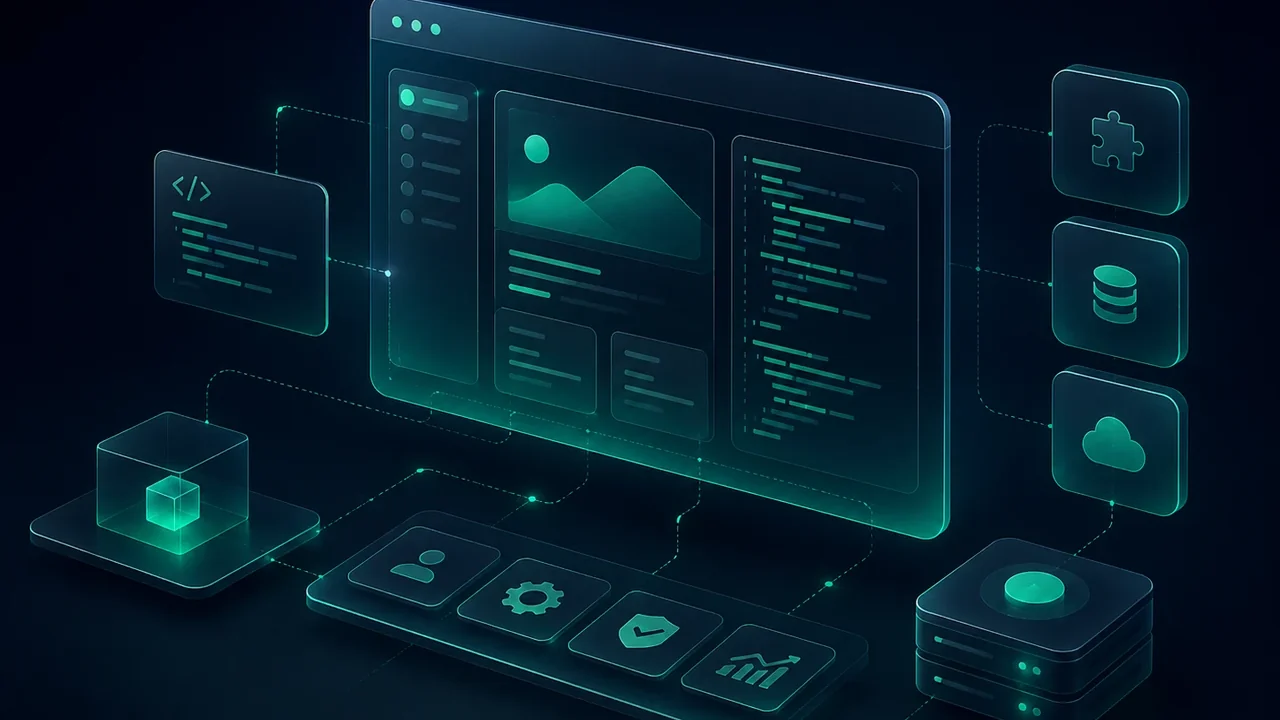
When a process needs rules, permissions, history, documents and reporting, we design a platform that reflects that logic instead of forcing the business into a generic template.
The operating problem
A system creates value only when it reduces operational uncertainty.
Accumulating modules does not fix an undefined operation. Before building, we identify entities, states, business rules, permissions, evidence, events and reports the company needs to control.
Expected outcomes
What the intervention should make clearer or easier.
These are capability outcomes, not guaranteed commercial metrics. The exact target is defined from the current operation and available evidence.
Roles and permissions by responsibility
Auditable workflows and states
Centralized documents, files and evidence
Dashboards and reports tied to decisions
API integrations when needed
How we approach it
Sequence decisions before expanding scope.
The sequence is adapted to the actual process, but assumptions, responsibilities and acceptance criteria are made explicit early.
Process discovery and use cases
Functional model and information architecture
Prototype critical flows
Modular build and acceptance testing
Deployment, documentation and controlled evolution
Best fit
Companies with proprietary processes that have outgrown generic tools or spreadsheet combinations and need a maintainable, evolvable web application.
FAQ
Questions worth resolving before starting.
Can it integrate with systems we already use?
Yes, when there is an appropriate technical mechanism —API, structured export or another authorized method— and integration creates more value than duplicating information.
Can the system support different roles?
Yes. Permissions and responsibilities are part of the functional design and should be defined before sensitive functions are built.
Can it grow by modules?
Yes. A modular architecture lets us prioritize the operational core and add later capabilities without making the first version unnecessarily large.
Next step
Start with the operating context, not a predetermined tool.
We can evaluate the current process, constraints and desired outcome before deciding whether the answer is strategy, integration, automation or custom development.